
Why Activity-Based Learning Is the Key to Raising Confident, Curious Kids
There’s a moment every parent treasures: watching their child’s eyes light up when they truly understand something. Not because they memorized an answer, but because they discovered it.
That moment — that spark — is exactly what activity-based learning is designed to create.
At Gowtham Global School, we’ve built our entire educational philosophy around this idea. Because we believe that the best way for a child to learn isn’t by sitting still and listening — it’s by doing, exploring, creating, and asking “what if?”
What Is Activity-Based Learning?
Activity-based learning (ABL) is an educational approach where children learn through hands-on experiences, collaborative projects, games, storytelling, experiments, and creative tasks — rather than relying solely on textbooks and rote memorization.
Instead of a teacher delivering information and a child passively receiving it, ABL turns learning into a two-way journey. Children become active participants in building their own knowledge.
This doesn’t mean academics take a back seat. Quite the opposite — research consistently shows that children who learn through doing retain knowledge longer, understand concepts more deeply, and develop stronger critical thinking skills.
Why It Works: The Science Behind Doing
The human brain is wired for experience. When a child uses multiple senses — touching, moving, speaking, creating — the brain forms stronger neural connections. Information becomes meaningful because it’s attached to an experience, not just a fact on a page.
Here’s what activity-based learning helps children develop:
1. Curiosity and a Love for Learning When school feels like an adventure, children want to come back. They ask questions. They explore. They stop thinking of learning as a chore and start seeing it as something exciting. A child who loves learning at age 6 carries that mindset for life.
2. Problem-Solving and Critical Thinking Activities — whether it’s a science experiment, a group project, or a math puzzle — require children to think through problems. They learn to try, fail, adjust, and try again. This is the foundation of resilience and creative thinking.
3. Communication and Confidence When children present their work, collaborate with peers, or explain their thinking out loud, they build communication skills naturally. At Gowtham Global School, spoken English and confident expression are part of every school day — not just a separate subject.
4. Social and Emotional Growth Working in groups teaches empathy, patience, and cooperation. Children learn how to listen, share ideas, and support each other. These are life skills no textbook can fully teach.
Activity-Based Learning at Gowtham Global School
From Nursery to Grade VII, we weave activity-based learning into everything we do. Here’s what that looks like in practice:
- Smart Classrooms equipped with tools that bring concepts to life visually and interactively
- Hands-On Projects where children apply what they’ve learned to real-world tasks
- Educational Field Trips that connect classroom concepts to the world outside
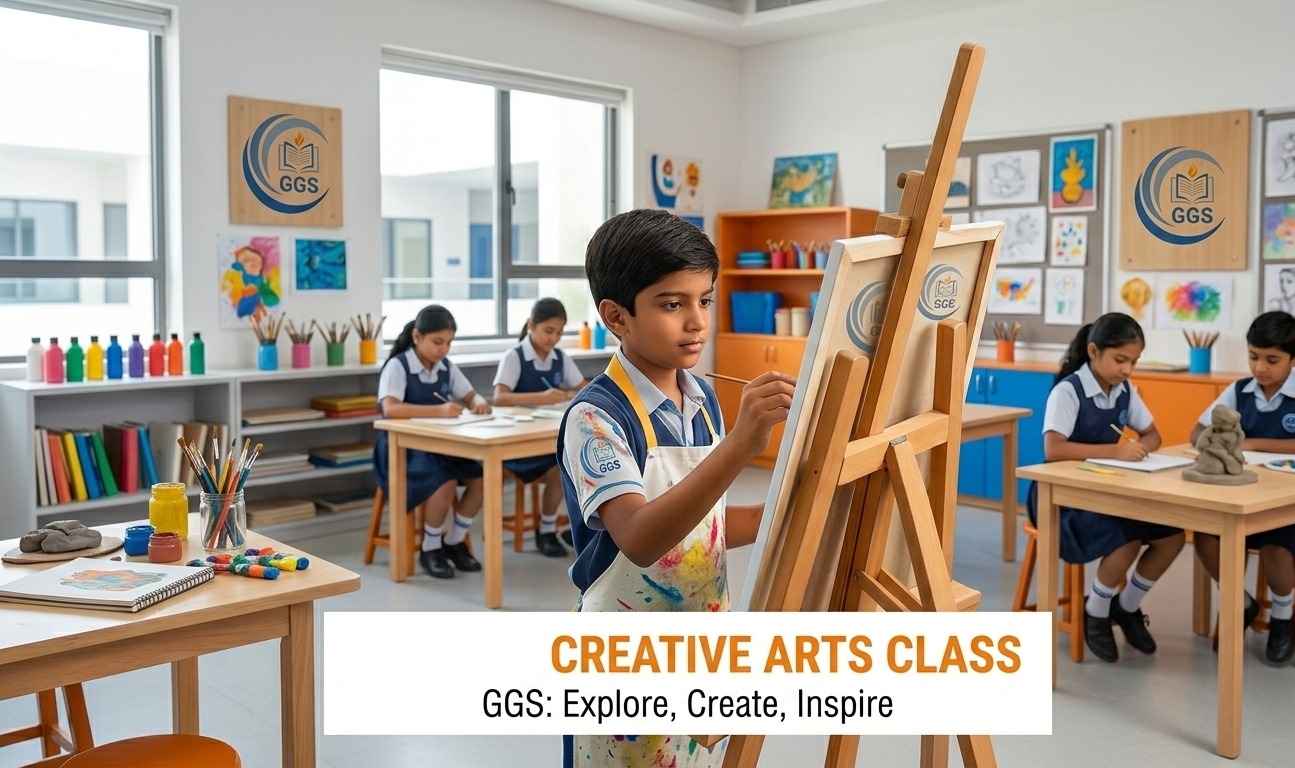
- Arts, Sports & Cultural Programs that develop creativity, discipline, and teamwork alongside academics
- Play-Way Methods in early years that make foundational learning joyful and stress-free
- Spoken English Programs integrated into daily classroom routines
Our CBSE curriculum provides the strong academic structure children need — and our activity-based approach ensures they truly understand and enjoy every part of it.
A Note for Parents: What to Look For
If you’re evaluating schools for your child, here are a few questions worth asking:
- Does the school balance structured learning with creative and physical activities?
- Are children encouraged to ask questions and think independently?
- How do teachers respond when a child makes a mistake?
- Is communication skills development built into the curriculum?
At Gowtham Global School, our answer to each of these is a firm yes. We believe mistakes are part of learning. Questions are celebrated. And every child, regardless of their pace, deserves to feel capable and seen.
Final Thoughts
The world your child will grow up in will reward curiosity, creativity, adaptability, and confidence far more than the ability to memorize facts. Activity-based learning isn’t just a teaching method — it’s an investment in the kind of person your child is becoming.
At Gowtham Global School, we’re not just preparing children for exams. We’re preparing them for life.
📞 Admissions for 2026–27 are now open. Come visit our campus and see our classrooms in action. Call or WhatsApp us at 9248096816 / 9989033004 or email us at admissions@gowthamglobalschool.com
